



In the age of (the) trillionaire and billionaires, the luster of the millionaire shines like a modest star in broad daylight. The “Everyday Millionaire,” once an American legend, now barely earns a dismissive shoulder shrug. Even Bernie Sanders stopped caring.
While it’s true that saving a seven-figure sum of dollar-denominated assets is easier now than it ever has been, let’s not kid ourselves: it is still extremely difficult. Four Olympic-sized hurdles stand between us and greener balance sheets:
Loss avoidance instinct (being too cautious)
Immediate gratification (spending, not saving)
Catastrophic life disruptions (bad luck)
Laziness (…)
Hurdle 1 – Loss Avoidance Instinct
We hear statistics like “the S&P 500 has returned 10% per year for the past 30 years,” casually followed by a time-value-of-money calculation and an aspirational future value. In my experience, these motivational exercises in isolation do little to instill proper behaviors.
If I told you that it only takes $1,306 per month in savings at a 10% compound annual return to reach $1,000,000 in 20 years, that’s a mathematical fact. What’s not true is the expectation that the full challenge of the task is contained within that statement. Easier said than done, as they say.
For one thing, there is no investment in existence that reliably delivers a stable 10% annualized return. No matter how many times we tell ourselves this, we can’t help but be surprised—and physically sick—during a market drawdown.
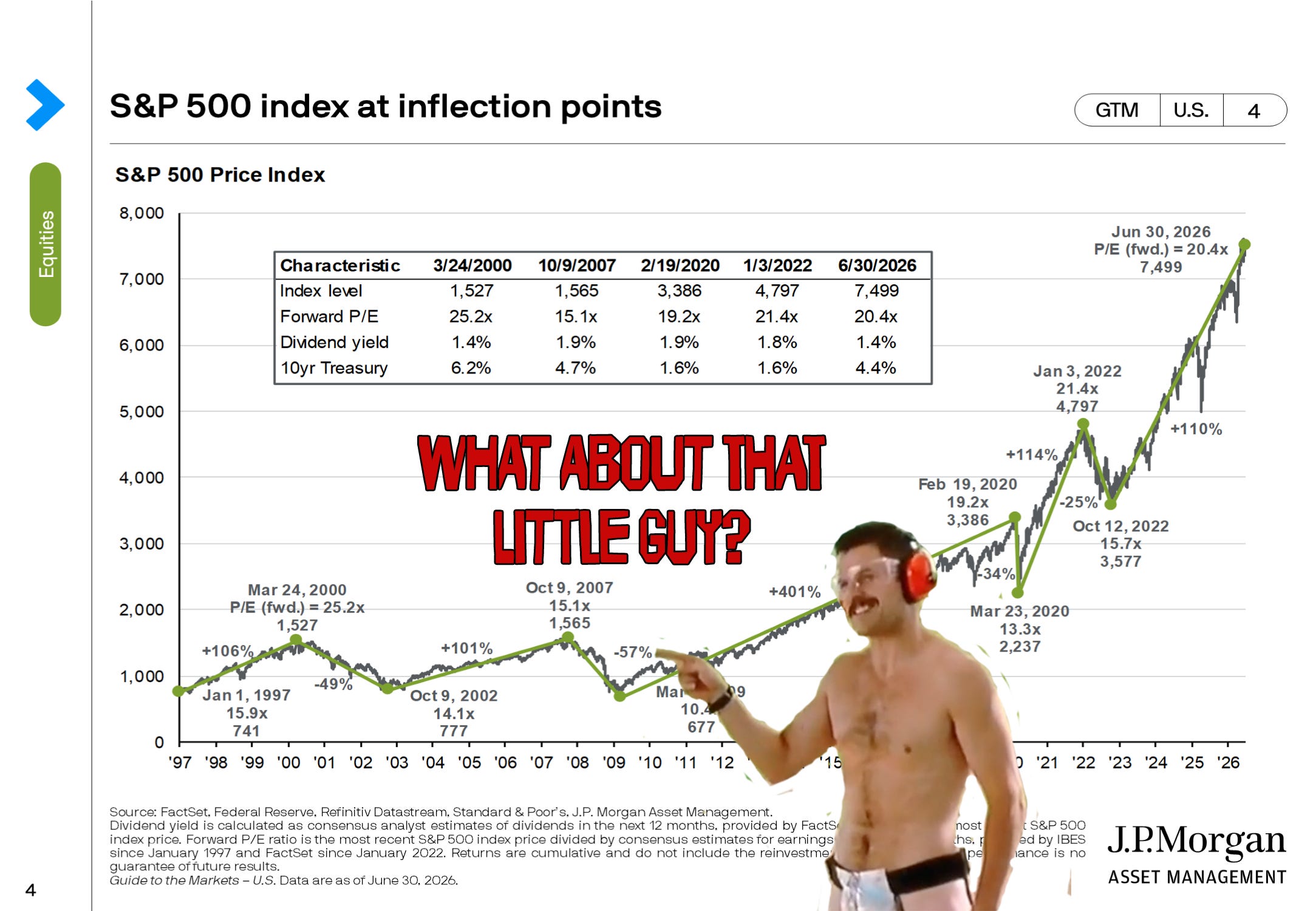
Imagine investing $1,306 per month and seeing little to no return for ten years. Now imagine investing consistently for five years only to watch negative returns. If you’re being honest with yourself, you’re picturing a very discouraged individual in a very realistic scenario.
Would you be discouraged enough to stop? Why not? Your investment seems to be going nowhere, while a savings account at least offers return of principal. It feels like the sensible play given your (hypothetical) limited investment experience.
Limited though it may be, our experience is all we have. Your condensed investment history informs your decisions far more than a 30-year chart showing what some hypothetical portfolio did. It takes 30 seconds to look at a chart but 30 years of perseverance to live the results.
Hurdle 2 – Immediate Gratification
Then there’s the insatiable consumer that lives inside all of us to varying degrees. Of course a Porsche today is better than a Porsche tomorrow—especially while the hairline is still intact and there’s still something for the wind to blow through.
Good luck fighting that beast. It defeats all but the mightiest and craftiest savers.
Hurdle 3 – Catastrophic Life Events
The indiscriminate nature of bad luck is particularly disheartening because it lies outside our control. We can partially insulate ourselves from negative random events, ironically, through loss-avoidance behaviors. But paying too much attention to hurdle 3 may send you sprinting straight into hurdle 1.
Clearing both demands smart risk-taking: diversifying your bets, exercising your mind and body, collaborating with like-minded people, learning new skills, and knowing your limits. These are the hallmarks of true prudence.
Ultimately, we all suffer the fate of life. Some fates are simply more expensive than others. That’s unfair—tragic, even. But tragedy is the domain of poets and playwrights. Economics just keeps supplying the material.
Hurdle 4 – Laziness
Finally, you must overcome the inertia of your own psychological and physical weight. It is easier (and generally takes less time) to earn a master’s degree than it is to intentionally save every dollar toward a million.
I cannot blame anyone for not wanting to tackle the task. It’s optional, after all. You don’t need a million dollars. We can, however, fault those who demand the result without the work.
Results beget action. An actionless life yields little in return.

Put It on Autopilot
If you’re already a millionaire, take a moment to appreciate what it took to get here. It’s an uncommon achievement. The existence of the ultra-wealthy doesn’t diminish it.
If you’re not, don’t worry—you’re in good company. Most Americans aren’t millionaires. CNBC and Ramsey Solutions report roughly 24 million millionaires in the U.S., which equates to only about 1 out of 14 households. It’s still a small club.
One other noteworthy fact: nearly the entire cohort of U.S. millionaires falls in the 50-and-older age group. Not surprising, because achieving this goal is really hard and takes a lot of time. The under-50 millionaire is rare and often the result of inherited wealth1.

Excerpt from 2026 Bank of America Study of Wealth Americans
Knowing the challenge firsthand from hundreds of perspectives, I’ve distilled what I consider the most reliable path to $1,000,000. It’s not a guarantee, and it’s not easy—nothing worthwhile ever is—but it’s how nearly every millionaire I work with has joined the seven-figure club.
STEP 1: Acknowledge the Difficulty
Building a seven-figure net worth is very hard. Admitting this is the true first step. Underestimating the challenge leads to discouragement and counterproductive coping behaviors.
The most difficult part is the patience required. We think we want success quickly, but that’s a siren’s song. Give this process the time and respect it demands—20 to 30 years if that’s what it takes.
Remember: $1,306 per month at 10% compounded annually gets you to $1,000,000 in 20 years. Two seconds to read. Twenty years to do.
STEP 2: Know Thyself
You are not Lieutenant Data. “VOO and chill” is not a reliable strategy because nobody stays “chill” while the market is in free fall. Build a portfolio and accountability framework around your actual human wiring. One of many reasons good financial advisors are worth every penny.
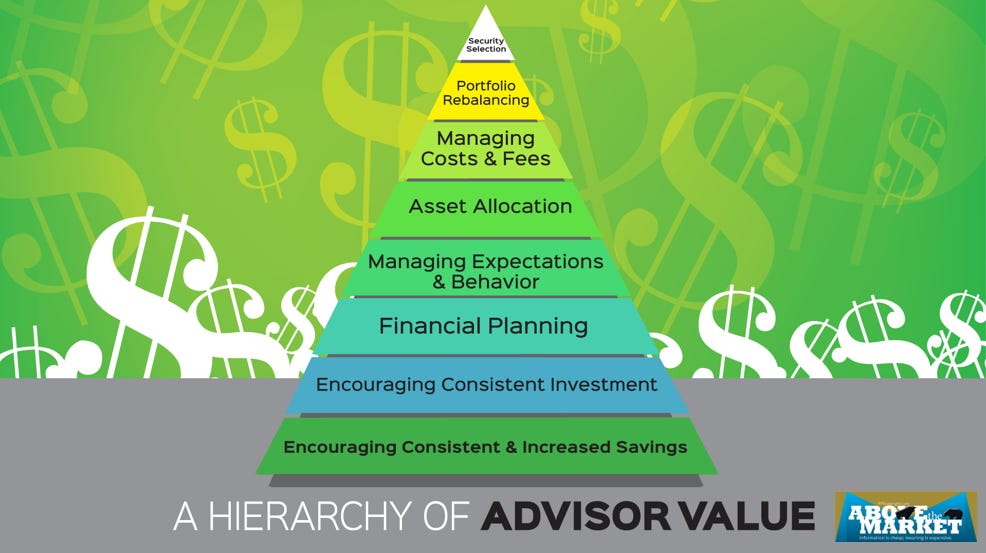
Any quantitative analysis that dismisses qualitative human factors is garbage. Never buy the argument that working with a competent financial professional costs you in the long run. It’s an argument as vapid as the scenario assumptions.
STEP 3: Use Payroll Deduction
Never rely on manual savings. It just doesn’t work. I’ve watched disciplined savers get outperformed by scatterbrained space cadets who had payroll deduction on their side. Out of sight, out of mind.
True story: I once met a man named Jeff who had worked for Cincinnati Bell (now AltaFiber) for over a decade. When I stressed the importance of saving into a 401(k), he said, “I’m not going to do that—it’s pointless.”
I replied, “Well, you already are—your company auto-enrolled you when you were hired.” He disagreed, so we logged into his Fidelity NetBenefits account. Surprise: over $250,000.
He lost the argument, but it was still a great day. (I’m not sure he ever told his wife.)
Never underestimate your ability to procrastinate or rationalize. 401(k), brokerage account, Roth IRA, 529 plan—doesn’t matter. Use payroll deduction whenever possible to auto-invest. It is your most powerful tool.
STEP 4: Be Benignly Negligent
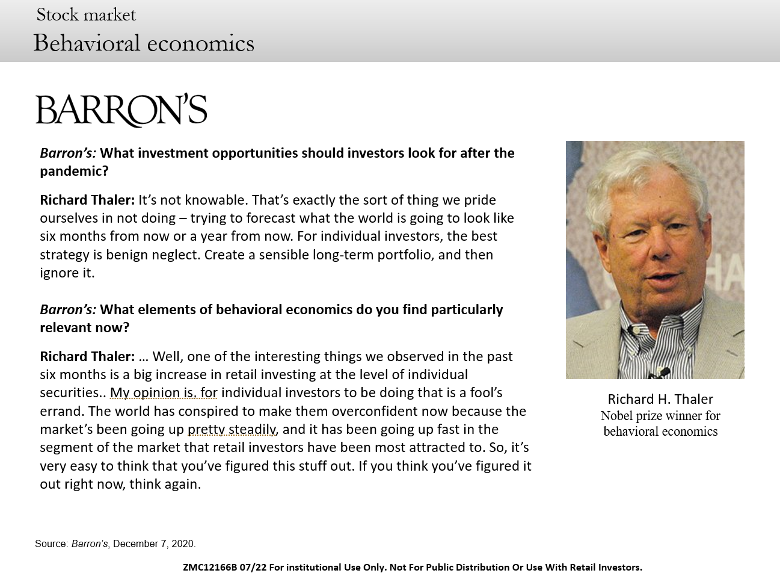
Stop logging into your accounts daily (or even weekly). It won’t make a productive difference unless it motivates you to save more—which, knowing how humans work, is unlikely.
Accept that you won’t always own the best-performing asset. Michael Phelps once dominated swimming; he’s not the fastest swimmer today. You may get lucky for a stretch, but reversion to the mean should be your baseline expectation.
Performance chasing is a sin, and the wages of that sin are wheels spinning in the mud. Pick a sensibly diversified allocation and stick with it. Do not deviate. Every fiber of your being will try to betray you, so stay vigilant.
That’s it. Easier to read than to do, for sure.
It’s worth noting this isn’t the only honest path to a million (or more). You could launch a successful business, make a concentrated bet that pays off, inherit wealth, win the lottery, or strike it rich through equity compensation. Many roads lead to great wealth. This one just happens to be the most accessible—available to anyone with a modest income and the willingness to do what it takes.
It will remain unachievable for many. Some lack the time, others the income, still others the luck. We can’t all sit in the top 10% wealth cohort, and that’s okay. Being there simply gives you a bigger menu of options—and with it, greater responsibility. That’s a conversation for another day.
Investment advice offered through National Wealth Management Group, LLC.
The information presented is for educational and informational purposes only and is not intended as a recommendation or specific advice. Past performance does not guarantee future results.
Consult with a qualified financial advisor regarding your individual situation.