


We love a good get-rich-quick story. They conjure mixed feelings of mitfreude and seething envy that shocks us out of a banal existence. Like winter air on a naked face, they make us feel alive.
These feelings inevitably evolve into fantasies of fortune as ‘imagine if’ scenarios propagate in our thoughts. I’m reminded of the scene in Back to the Future Part II where the antagonist, Biff Tannen, finds the 1955-2000 Gray Sports Almanac in the future timeline and gives it to his 1950 self.
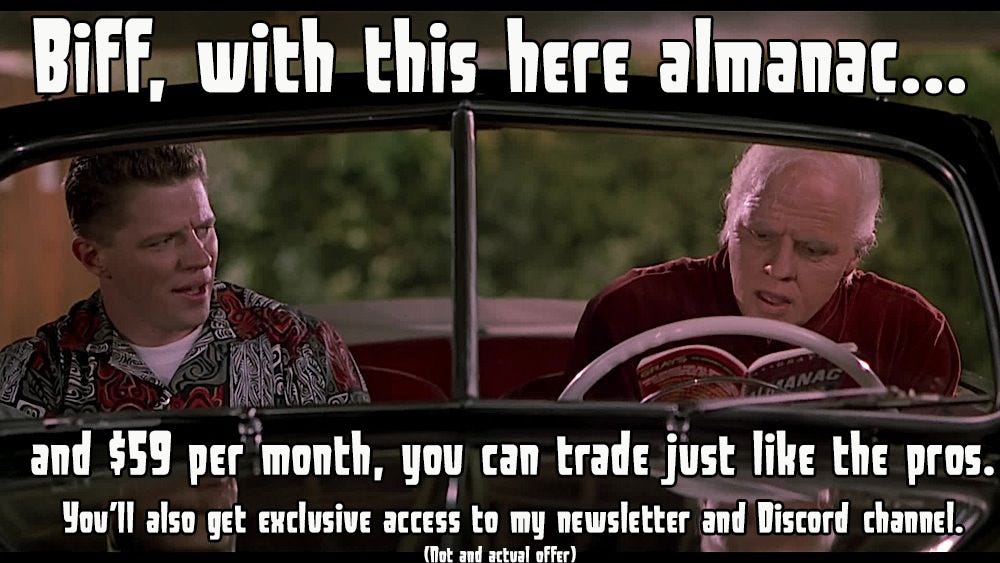
Using the foresight within, Biff skews the betting odds to be 100% in his favor and accumulates a massive amount of wealth. So much so that he changes the entire course of humanity’s future, a slight problem considering he’s a meathead.
The fantasy centers around the motif ‘what if I had perfect information about the future?’. Sometimes I think about which stock I would buy as a college freshman, with my meager income as a weight-room attendant, if I could just transfer the knowledge I have today to my younger self.
The answer? Monster Beverage Corp (MNST).
This is not a recommendation to buy Monster Energy Corp.
It boggles my mind that Monster Beverage Corporation has done as well as it has, with a 25-year return of ~218,058%. Personally, I’d rather drink out of my cats’ water bowl, but this is beside the point.

The real question is, would buying the stock be the best way to play the trade if I could pull off this fantasy? A $10,000 investment would yield roughly $22 Million from March 2001 through the end of last February (2026).
What is this, a return for ants? We need to pump these numbers up and tighten the timeframe big time. In the spirit and style of political insider trading. It’s for a good cause; my private foundation would depend on it.
We’ve all heard about levered trading and the use of options to ‘enhance’ returns, but the references are rarely accompanied by any explanations. We’re always left wondering, exactly how does this work?
It’s almost as if the people discussing these things don’t understand themselves. But you are subscribed to The KaratStick where we don’t bury the leads like some finfluencer hack.
First, let me draw up the footnote disclosure here because I know none of you read that jargon. This is NOT a recommendation and should not be construed as financial advice. It is for your edification only. The strategy discussed below is extremely high risk. Even I don’t do this.
Do with it what you will. Hopefully, something sensible.
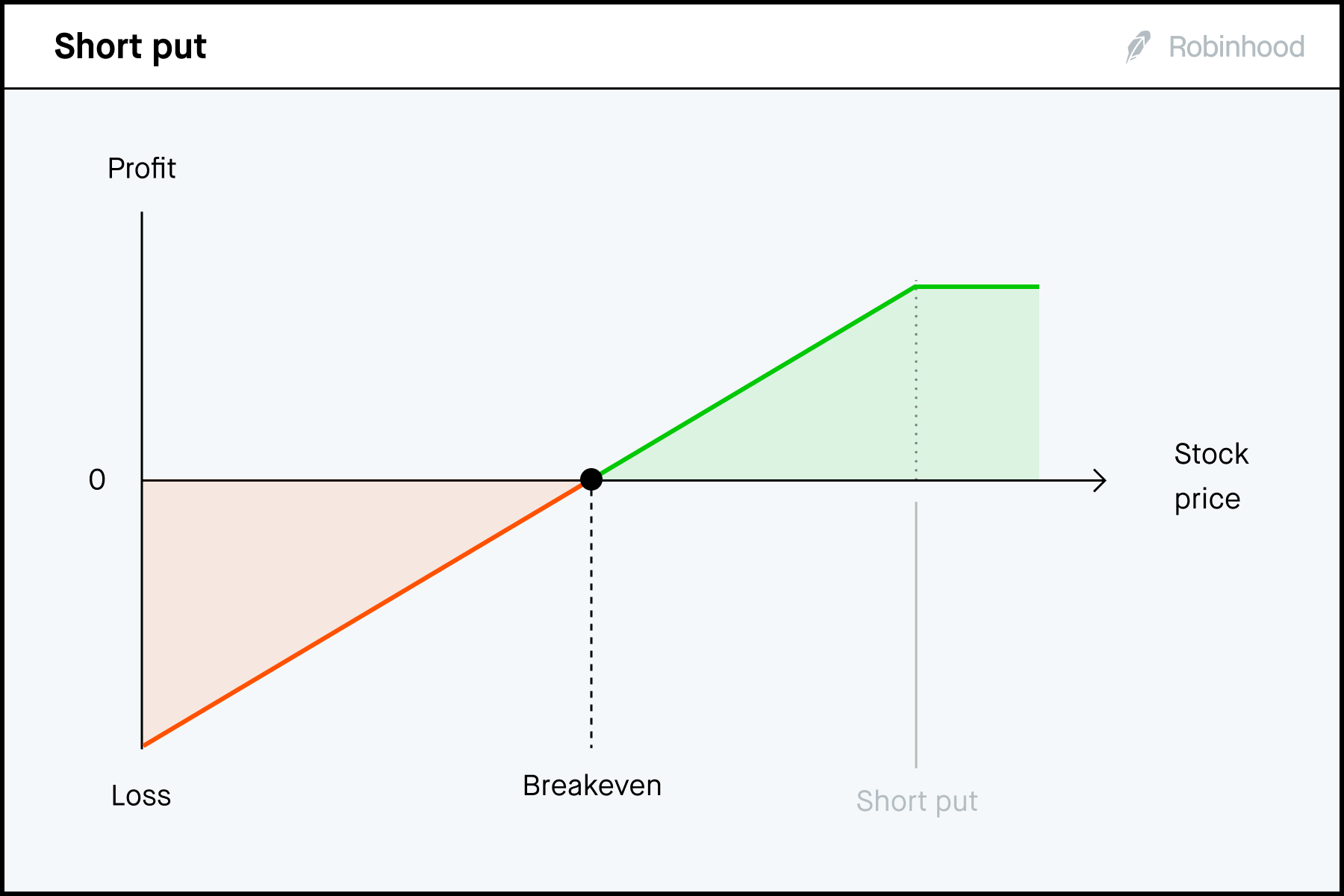
The first thing an investor would do if they had a very high degree of conviction (certainty in my fantasy), would be to sell uncovered (naked) puts to investors who want to protect themselves in the event of the position going down. Other investors that do not know what you know, colloquially referred to as suckers.
(I know this is what you had in mind.)
Uncovered (naked) – simply means that I do not hold the underlying position to cover a potential exercise (e.g. shares of MNST). It’s a very risky position to take.
Put – is an options contract that guarantees a stock will be bought by a contra party (i.e. the investor taking the other side of the trade) at a pre-determined price. You sell puts if you think the stock will move higher and buy if you think the stock will move lower.
Not so fast, however. You can’t just willy-nilly sell naked puts all over the place expecting unlimited income. You first need to be approved by a broker, such as Charles Schwab, for a margin account and Level 3 or higher options trading for uncovered strategies. You will generally need to prove you are good for the money before a broker will let you wreck yourself.
Margin trading could be a topic for an entire newsletter by itself. Suffice it to say here that it’s like a home equity line of credit for a non-IRA brokerage account. It allows you to borrow cash from a broker using existing positions as collateral. As you might expect, interest fees apply.
There are policies, such as Regulation T, that limit the broker’s exposure to investor stupidity, but these are not perfect. Ultimately, it’s the broker’s discretion whether you are approved, and remain approved, for options trading.
Ok, so we have the margin with Level 3 options approval. Time to sell some puts as close-to-the-money (close to the option strike price) as possible without triggering the exercise. These will typically fetch the highest premiums. And since we know for certain what the stock price will be in this fantasy scenario, we can easily find the contract that will fetch the highest premium.
Close-to-the-Money – describes a situation where the options contract is close to exercising.
Websites like Yahoo Finance, Barchart and NASDAQ.com provide options chain data in real time, as do brokers as part of their investor services. This is where the right contracts could be identified.
Again, using MNST as an example, the 2026-04-17 (m) Put at a $135 strike price on MNST (expires April 17, 2026) is trading at a $9.48 per share as of the time of this writing. That means I can agree to buy the stock at a price of $135 between now and April 17, regardless of what the stock price is. Even if it is worthless, which would be a maximum loss scenario.
If it’s higher, I pocket the premium and move on. $948 per contract sold in this case, the maximum potential gain. The standard options contract sold in the US are in increments of 100 shares. If a naked put triggers, well, let’s just hope the seller already paid the utility bill for the month. Good thing we are certain in fantasy land.
You might think ‘$948 doesn’t seem like a lot’ and you would be right. That’s why I wouldn’t stop there. First, know that I can sell as many puts as the broker will permit under the margin agreement, multiplying this premium. Second, I wouldn’t just going to sit on that cash.
I then take the premium income and apply it by buying call options with a strike price under our predicted price on the expiration date. Again, let’s use the monthly April contract expiring on April 17th, 2026. Using the options chain, I can see the contract with the $150 strike price is trading at $5.28 per share, mid-price. That’s $528 per contract.
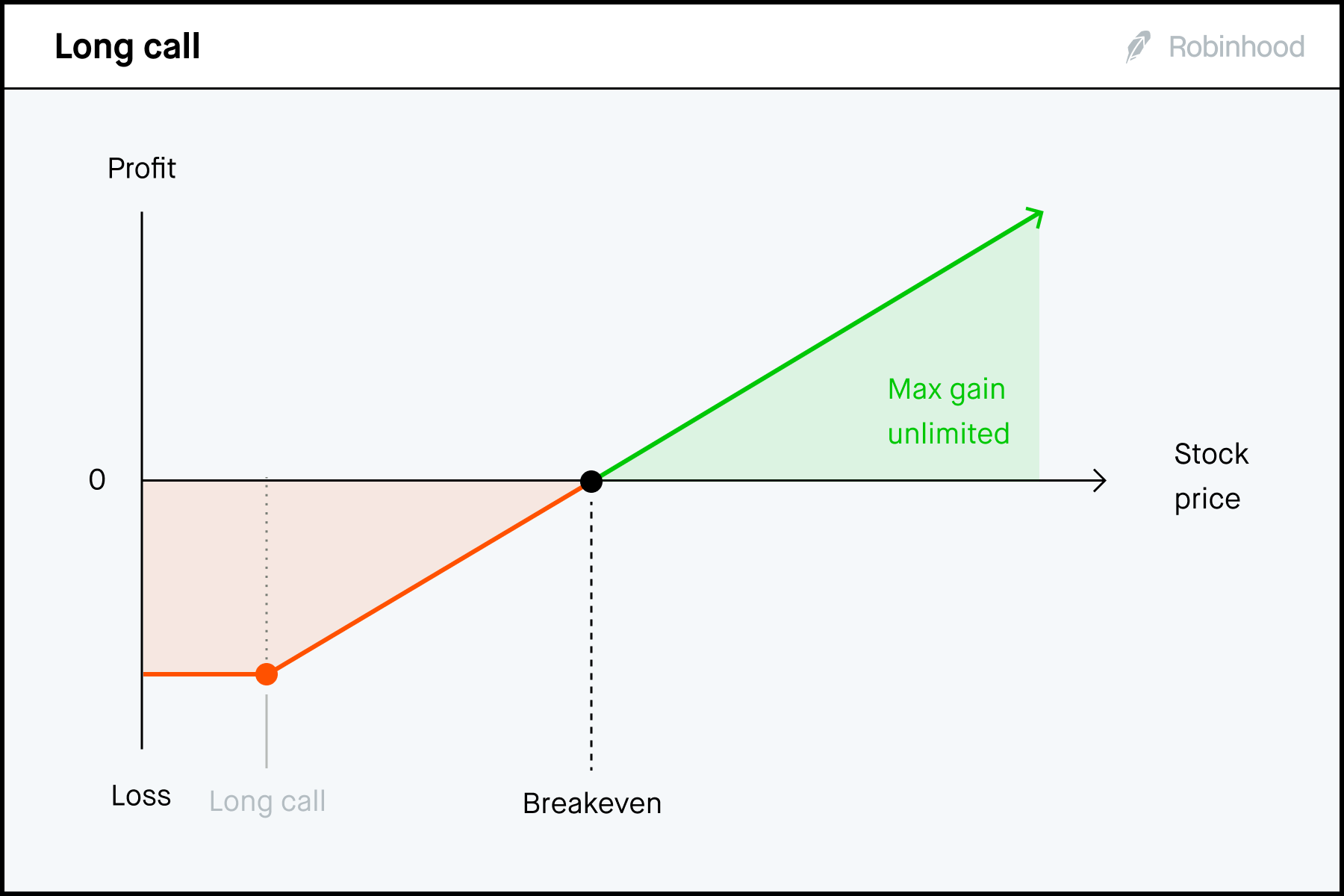
Call – is an options contract that will guarantee a stock can be purchased from a contra-party at a pre-determined price. You will sell calls1 if you think the stock is going down or will be flat and buy if you believe it will go up.
Now, I should buy as many calls as I afford and wait for April 17. Let’s say I knew that MNST would trade for $170 per share by this date (I don’t, and shouldn’t have to say this), it should result in a net profit of $1,472 per contract once accounting for the call premium.
Theoretically, in this fantasy, the options trade could be performed monthly in progressively larger amounts as my margin buying power increases. The compounding effect would be ridiculous. Explosive even.
Most people should avoid explosives, and this is equivalent to playing with thermite naked with a lit cigar. Nobody in their right mind would adopt such an investment policy unless they had a near perfect ability to predict market prices.
I’ve come across a few traders with public profiles espousing such a superpower. Perhaps they do, but luck certainly has a role in any precision-based trade strategy.
Unless you are one of the few privy to the information shared in congressional special committees and licensed for insider trading, a diversified approach based on fundamentals is much more reliable. It’s far less exciting but no one recommends an F1 car for basic commuting.
As I’ve said before, markets and economies are dynamic like shifting winds on a Spring day. This makes events notoriously difficult to predict. We discuss this very notion in the most recent episode of The Money Alchemist in relation to the Iran conflict.
This isn’t to suggest you shouldn’t have some fun entertaining fantasies and learning how you can use options to your advantage. Just don’t bet the farm on it.
Options trading, especially uncovered (naked) puts and margin strategies, involves a substantial risk of loss and is not suitable for all investors. You may lose more than your initial investment—potentially far more.
To learn more about the risks and characteristics of options, refer to the Options Clearing Corp’s Characteristics and Risks of Standardized Options (PDF)
Margin trading amplifies both gains and losses, and brokers can issue margin calls with little notice. There is no guarantee of profit.
This discussion is for educational and illustrative purposes only and should not be construed as a recommendation, advice, or solicitation to buy or sell any security or engage in any strategy. The performance was calculated without fees or trading expenses and with dividends reinvested. No actual client of National Wealth Management Group, LLC invested in this hypothetical portfolio.
Past performance is no guarantee of future results. Always consult a qualified financial professional and review your risk tolerance before trading options. Investment advice offered through National Wealth Management Group, LLC.
The information presented is for educational and informational purposes only and is not intended as a recommendation or specific advice.
The risk to selling naked calls is unlimited – not a good position to be in. Selling covered calls are commonly used to generate additional portfolio income and do not inherently increase portfolio risk.