


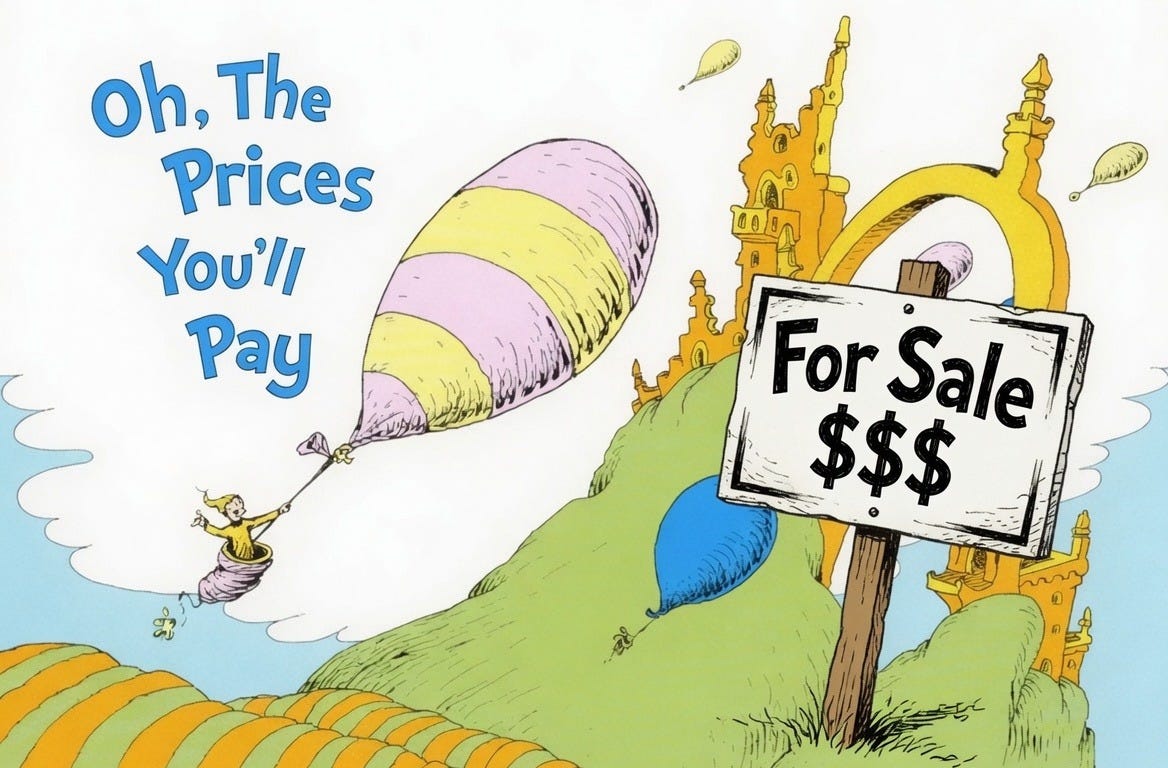
It was 2009 with the ink still fresh on my marriage certificate. Policymakers were busy in Washington patching self-inflicted injuries in the financial system while my new bride and I merged our separated futures into one with youthful optimism. Money was tighter than our ambitions, as is true for most young people.
In 2006, in what can only be described as a momentary lapse of sanity, I purchased a town home with my brother at the peak of the housing bubble. I carried the legacy of this woeful financial decision into my marriage like a regretful tattoo.
My wife naively accepted this as part of her price – a price she later found out was disproportionate. You could say I conned her, but it would be too generous to admit I was aware of the weight of this baggage myself. It was unfortunate, but we made the most of it.
The town home was tucked in a quaint corner of Loveland, Ohio, now a hotspot in the greater Cincinnati area. Loveland, which used to be a backwater biker town that scarred an otherwise ideal rural Ohio landscape, is now very true to its namesake. A worthwhile place to visit for out-of-towners.
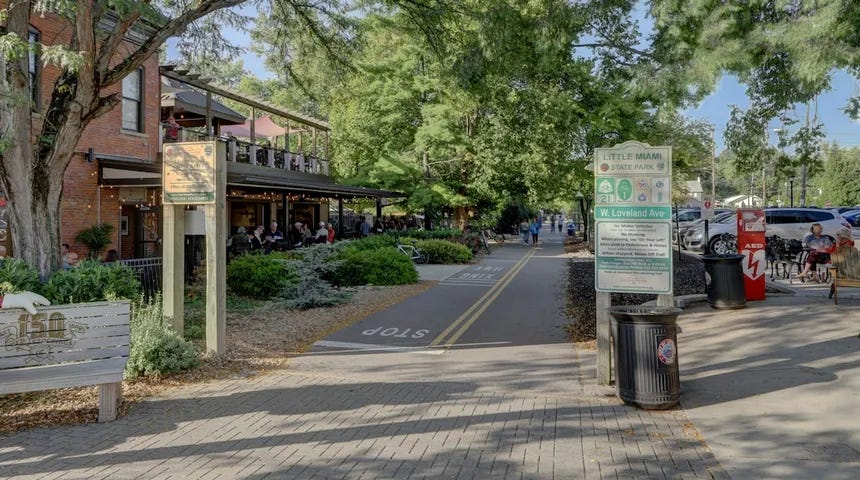
Entrance to Loveland bike trail in Loveland, OH. Nestled between Paxton’s Grill and Ramsey’s Trail Side. Paxton’s used to be an old dive bar patronized by bikers.
The turnaround was non-existent in 2006 when my brother and I bought the place, and only in its infancy in 2009. Neither of us saw it at the time. All we could see was a checking account struggling to stay positive as it fed the demanding appetites of a mortgage, HOA fees, student loans and car payments (among other things).
About once per week my wife and I would get the urge to forget about our insolvency. Lucky for us, the local El Rancho Grande offered the requisite medicine at an affordable cost. They sold irresponsibly large entrees and beverages at college-budget prices. We would use the buy-one-get-one entrée coupon regularly pinned to our fridge, courtesy of Valpak.
It served as a hopeful reminder that respite was just $20 away. Two full meals with ample leftovers and drinks with tip for around 3 hours of minimum wages ($7.30/hour in 2009). Satiated, we would return to the town home bought for $113,000 three years earlier a little more comfortable to admit we may be in over our heads.
We would sleep like babies for a night. But reality was there to greet us every morning like an overlord on a tight schedule. It was tougher to get ahead than was advertised. This was our life in 2009. Things slowly got better until one day in 2019, we felt we realized the weight was gone.
It sounds familiar because it’s the same story for every generation. Like inflation, the sensation that progress is absent is an illusion masked by the moment, only to be uncovered by diligence applied across time.
“Houses are unaffordable” is something we’ve all heard. We may even be guilty of propagating this very message. Curiously, the people this information matters to the most, homebuyers, don’t seem to believe it. If they did, nobody would be buying homes.
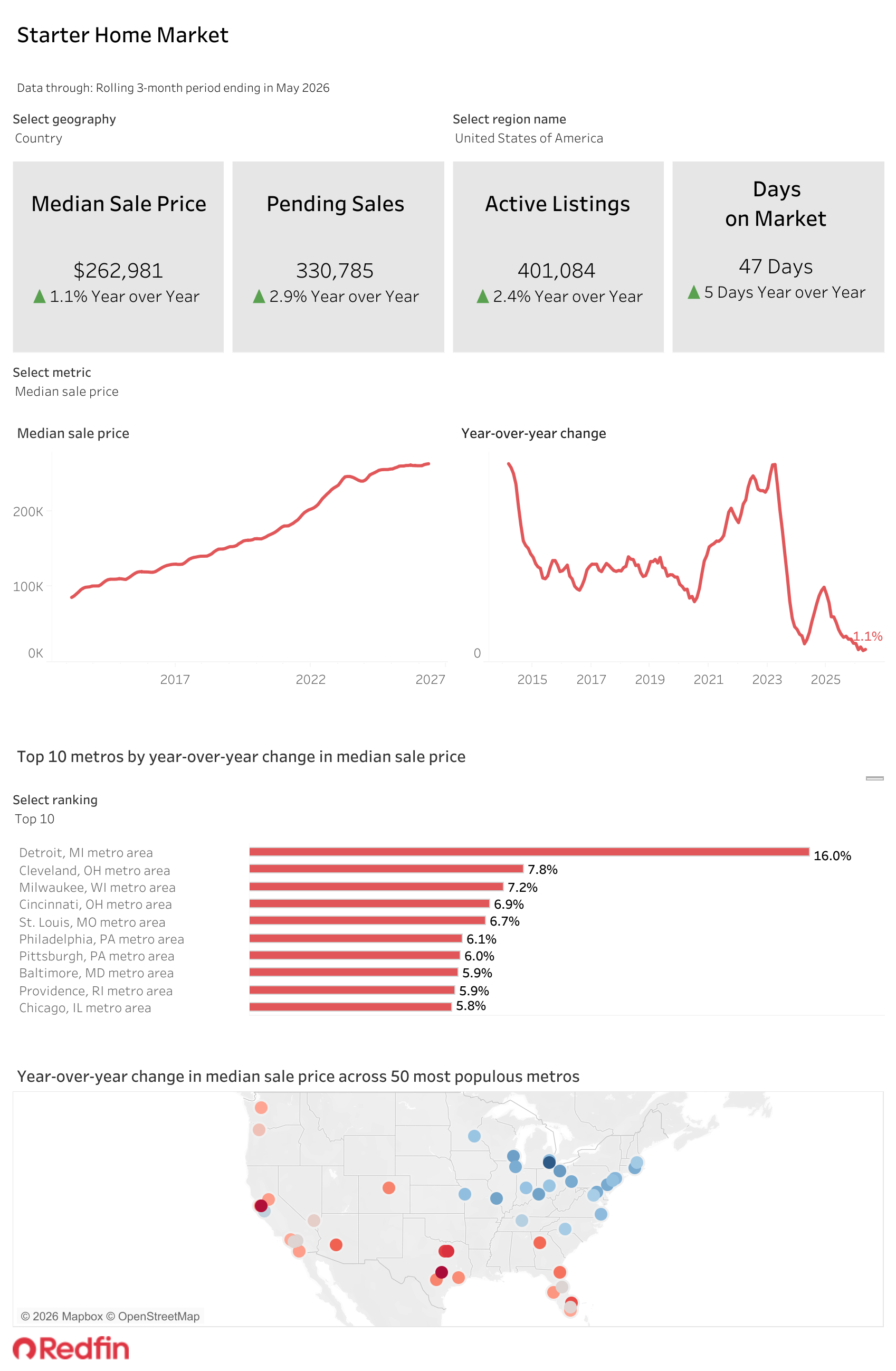
It’s a real conundrum. We see prices going up, look at our bank account balances and ask ourselves and everyone around us, “who is paying these prices?!”
Pokémon cards, now $7 a pack, are fetching insane values with one recently trading for a ridiculous $16,492,000.
Farmland, which used to sell for less than $10k per acre pre-COVID is now fetching over $220k per acre in areas targeted for data center build outs.
If you thought Homearama home prices were eye-watering before, one 2026 entry is expected to list for $3.7 Million!
These are all true data points in the sea of data that comprises our economy. Existing as anecdotal outliers, but powerful in shaping sentiment. Pay a little too much attention and a popular fallacy can propagate in the psyche: we cannot be wealthy until we own the outlier and we cannot own such an outlier without extreme wealth or luck (preferably both).
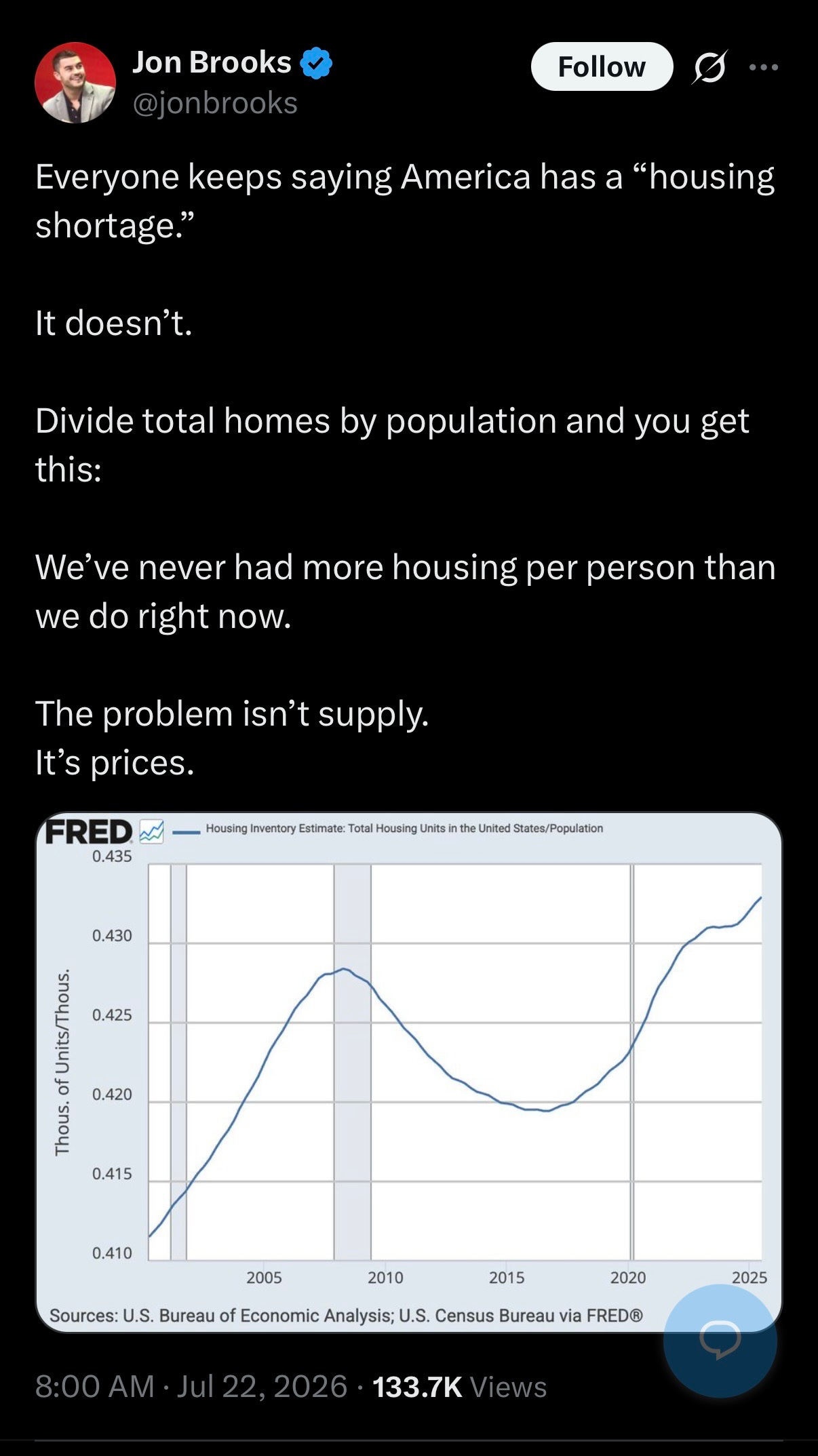
Merge this modern frustration with the timeless reality that it is tough to get a firm financial footing, and we begin to zero in on an explanation for contemporary financial nihilism in the wealthiest nation to ever exist. In search of a solution, some become political activists, others pursue schemes for quick and easy money. The laziest paths tend to be the most destructive.
Regardless of its manifestation, it is a destabilizing force with the potential to degrade our quality of life unnecessarily. That same home I paid $113,000 for in 2006 is valued at $204,200 today. Hardly unaffordable for anyone earning the inflation adjusted median wage today ($62,200)1. It was a lovely starter home in 2009, and it would serve a newlywed couple well today.
That translates to exactly 3% in annualized inflation since 2006. Perhaps it’s not houses that are unaffordable but our expectations. And before you say, “oh yeah, interest rates are different now…” The rate on my mortgage in 2006 was 6.25%, so put that in your pipe and smoke it. Looking for something a little bit harder? Ask a couple that bought a starter home in 1984 what their mortgage rate was.
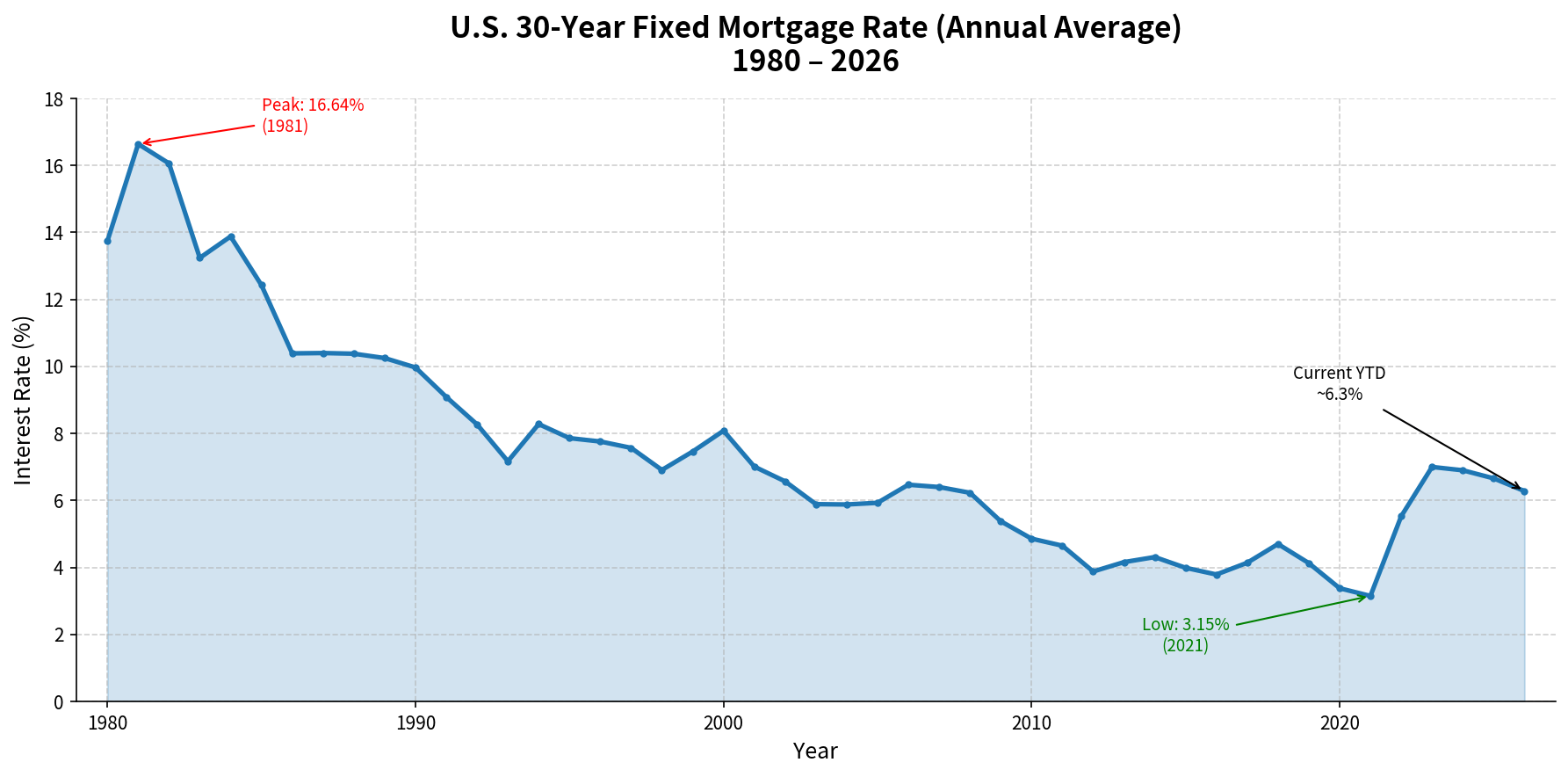
Source: Bankrate, *Freddie Mac
The variable inputs in the financial success formula are different for every generation, but the math works the same. I’m not even sure these exercises in historic comparisons are productive. They simply exist to either excuse or refute our unwillingness to address today’s challenges. Just what the world needs, more arguments.
Though the “housing affordability crisis” is overblown, rising prices are a big challenge today. I recently took my eldest son to experience the joys of El Rancho Grande. That same meal was $75 with tip. That translates to an 8% inflation rate. It’s a hefty price hike on escapism.
Maybe that’s the true crux of the issue: the low-cost experiences we once relied on to destress have themselves become financially straining. Our social disdain for the vulgar modernization of tipping service workers reflects a violated desire to escape the tension of life. The flip of the register tablet can be an acute moment of panic that breaks the experience spell.
It exacerbates a tension that must escape the body, and many choose to release it by raging on Reddit forums and TikTok shorts. Not just about tipping but about the cost of living and how being young is the worst it has ever been. A poorly placed mic will create an obnoxious feedback loop that will not stop until it is repositioned. Such it is with this message.
Prices are moving higher. Tell me something new under the sun. Homes will continue to be more expensive. Restaurants will charge what they can get away with. Pokémon cards will sell for insane prices so long as there are buyers.
Life will progressively cost more in an inflationary regime. Inflation is a function of currency debasement, and changes in productivity and demand. All three levers influence what happens.
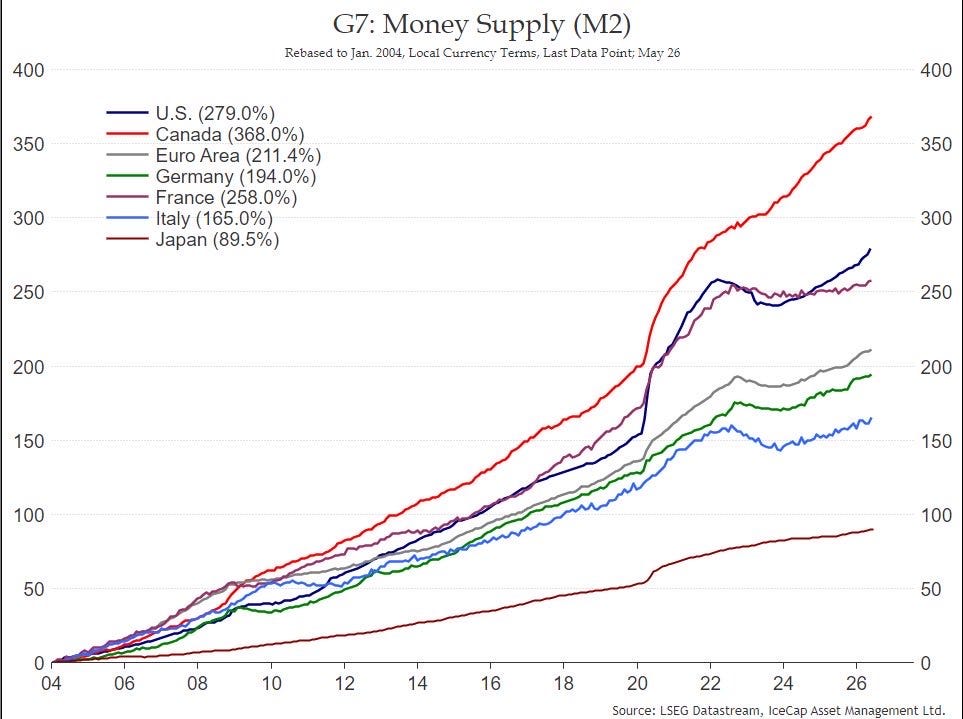
Prices are biased to inflate because that’s where the economic incentives lie:
Policymakers, because they are people, like to spend tomorrow’s money
Producers like to make more money, and
People like to consume more
So, what are we to do with this perspective-bending information? That largely depends on your current financial position. If you are in the early stages of building a positive net worth, it should serve as encouragement that it does get easier. Don’t be so desperate to alleviate your stress that common sense prudence is ignored for expedience.
For the more seasoned life-goers, it means having confidence in owning high-quality assets. Don’t be so worried that it’s all going to fall apart and you’ll have nothing. It’s good to invest and to seek a productive purpose for your wealth.
Most of all, do what you can to dispel the idea that it’s too difficult for people to get ahead. A modicum of historic perspective is all it takes to destroy the myth. Such pessimism is not doing anyone any favors.
In the words of the late, great Dr. Seuss,
“You can get all hung up
in a prickle-ly perch.
And your gang will fly on.
You’ll be left in a Lurch.
You’ll come down from the Lurch
with an unpleasant bump.
And the chances are, then,
that you’ll be in a Slump.
And when you’re in a Slump,
you’re not in for much fun.
Un-slumping yourself
is not easily done.”
These words were written in 1990 and are as true today as ever. It might be a good time to re-introduce this seminal work to our children.
Announcement
It is in the spirit of encouragement and positive messaging that the Karat Stick newsletter is expanding. Behind the scenes, we have added personnel to help refine the quality of what we deliver on a bi-weekly basis and to improve its visibility and shareability. I’ve been informed that my memes are unprofessional – a critique that cuts me deeply, but this is about you, not me.
We are most excited about our new monthly video interview of normal people living meaningful lives through vocation, family and community. I have the privilege of regularly encountering people that are living counter-narrative lives, inspiration within reach. We want to bring their stories to you.
It’s a new format and we’re curious to learn how it will land in the public eye. Positivity doesn’t sell as well as carnage, so we could use your help. For now, this means keeping an eye out for our next release. It also wouldn’t hurt to follow Karat Stick on Instagram and Facebook, which is where we’ll be posting short form content and updates.


Investment advice offered through National Wealth Management Group, LLC. The information presented is for educational and informational purposes only and is not intended as a recommendation or specific advice.
Personal stories, historical home values, inflation calculations, and market observations are illustrative only and do not guarantee future results.
Past performance is not indicative of future performance. All investing involves risk, including the possible loss of principal. Consult a qualified professional regarding your individual circumstances before making any financial decisions.
A 30-year mortgage originated with a $204,400 balance at a 6.5% APR would have a principal and interest payment of $1,283.73 per month. This would represent 25% of the monthly budget for a median full-time wage earner in the US, which is well within a healthy debt/income range, leaving room for additional debt.