

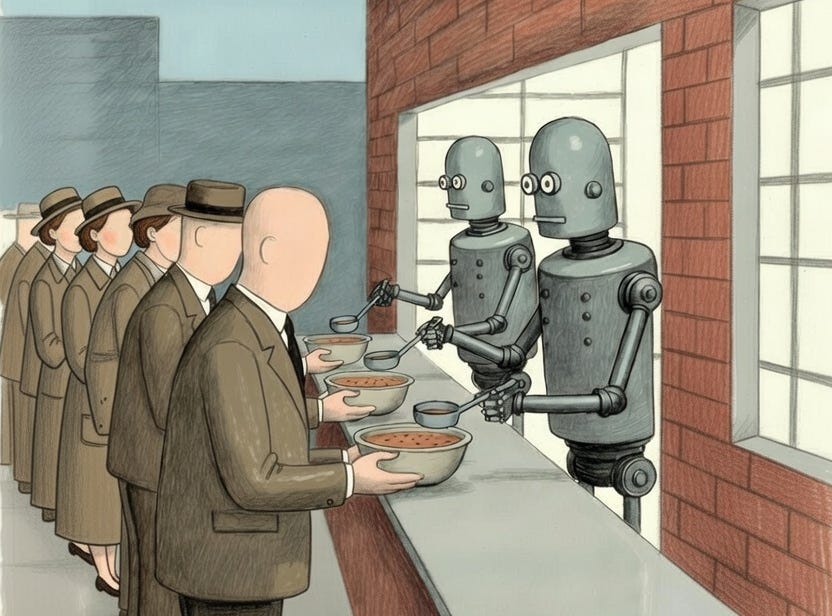
Let’s take a moment to contemplate how much life has changed in just ten years. 2015 may seem too recent a number for history, but much as transpired.
TikTok launched
Social media became the primary source for news1
Streaming replaced cable/satellite as dominant TV service
Doorbell cameras & facial recognition are commonplace
Donald Trump entered political office
Gen Z became first generation raised from adolescence with smartphones
US Federal debt climbs from $19T to $38.5T2
30-year conventional mortgage rates moved from low 3% range to nearly 7%
COVID-19 transformed culture & global government policy (e.g. work from home)
Meme coin & NFT boom came and went
Baby Boomers went from 30% of the workforce to about 15% in 20253
Sports gambling is legalized and prediction markets are now mainstream
Self-driving cars debut and EVs proliferate
Breakthrough in transformer architecture paved way for advanced generative AI
There are major changes I neglected to include, it’s tough to keep track of them all. Thankfully, building a comprehensive list isn’t required to drive home the point: change is constant and compounds over successive years.
It could be argued that the rate of change has been accelerating, something that is difficult to measure but feels correct. As a human, this is uncomfortable and potentially dangerous. What if we are blind-sided or fail to pivot in some advantageous way?
The latest disruption threatening a significant alteration to our lives is the application of AI as a replacement for human work. The consequences of which should be commiserate with its capabilities, yet not fully understood. Scenarios range from ‘AI as a productivity enabler’ to ‘AI will replace humans entirely’. The jury is still out.
Currently, few organizations have been able to broadly implement AI projects profitably. At least, not in any way that can fully replace labor costs as humans are needed to address tasks that require intuition and agency. This has not discouraged industry leaders from making bold proclamations, however.
“AI could wipe out half of all entry-level white-collar jobs — and spike unemployment to 10-20% in the next one to five years.” – Dario Amodei, CEO of Anthropic
“My controversial take would be that [AI replacing humans in workforce] this is going to be like a punctuated equilibria moment where a lot of that will happen in a short period of time.” – Sam Altman, CEO of OpenAI
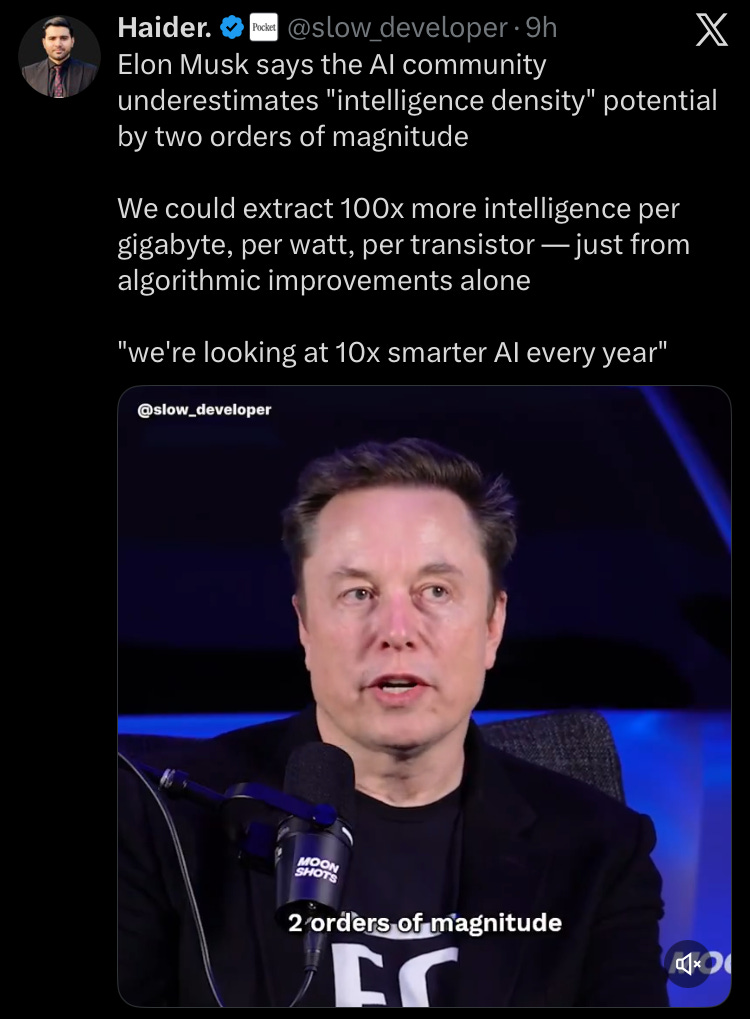
“My prediction is that work will be optional.” – Elon Musk, as CEO of xAI
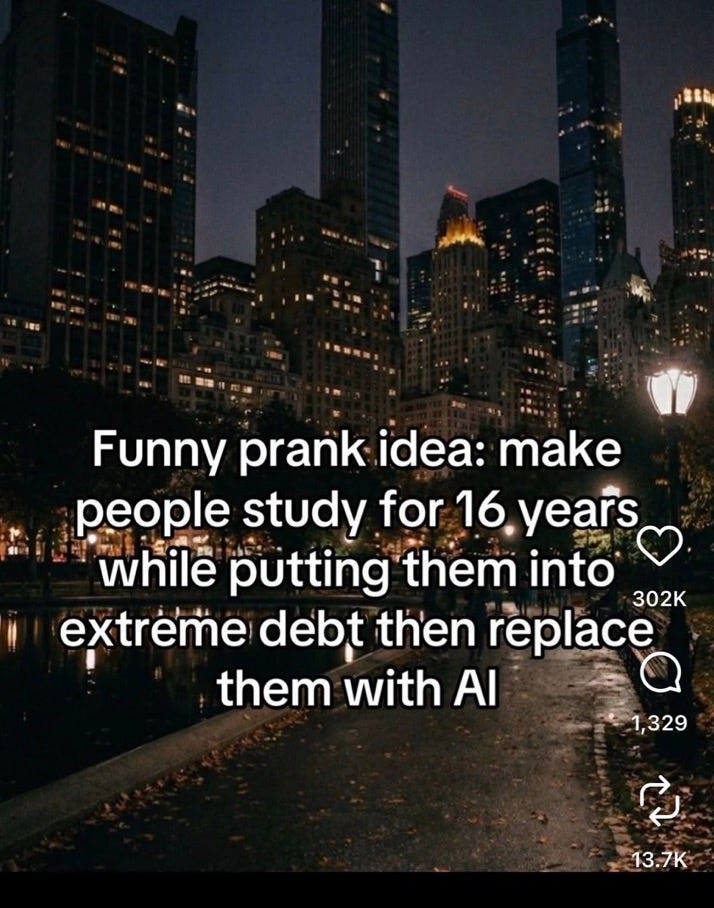
The talk on main street has assumed a dubious yet curious tone, with most working Americans settling into apathy or denial. There’s no way my fellow humans will trust a robot more than me, right?
Right... although, we all drive in cars welded by robots. I’m sure employers will value the humanitarian plea over shareholder interests.
It is appropriate to pull one’s head out of the sand to conduct a thought experiment with the question: what happens if my labor becomes obsolete? The possibility is not zero and some of the brightest minds in the technology industry predicting this very outcome.
Of course, this could simply be a sales pitch. Successful visionary founders often think highly of the projects they initiate. The difference here is that there are more than one, several in fact, all suggesting the same thing. And they have trillions of dollars in capital investment to back up their claims.
We tend to overestimate the degree of change in the near-term but underestimate it, substantially so, over the long-term. I suspect that many of these tech leaders are falling into the short-term overestimation trap, but this doesn’t mean they are wrong.
I’m not convinced the ‘equilibria moment’ Sam is talking about is just around the corner. For most employers, it is still far too expensive and risky to roll out a major AI initiative that can substantially offset labor costs.
As Chase Dillingham of Train My Agent, a Cincinnati-based AI consultant, puts it, “it [AI] is not a magic bullet”. The cost/competency trade off still favors humans as AI software is cost additive, for now.
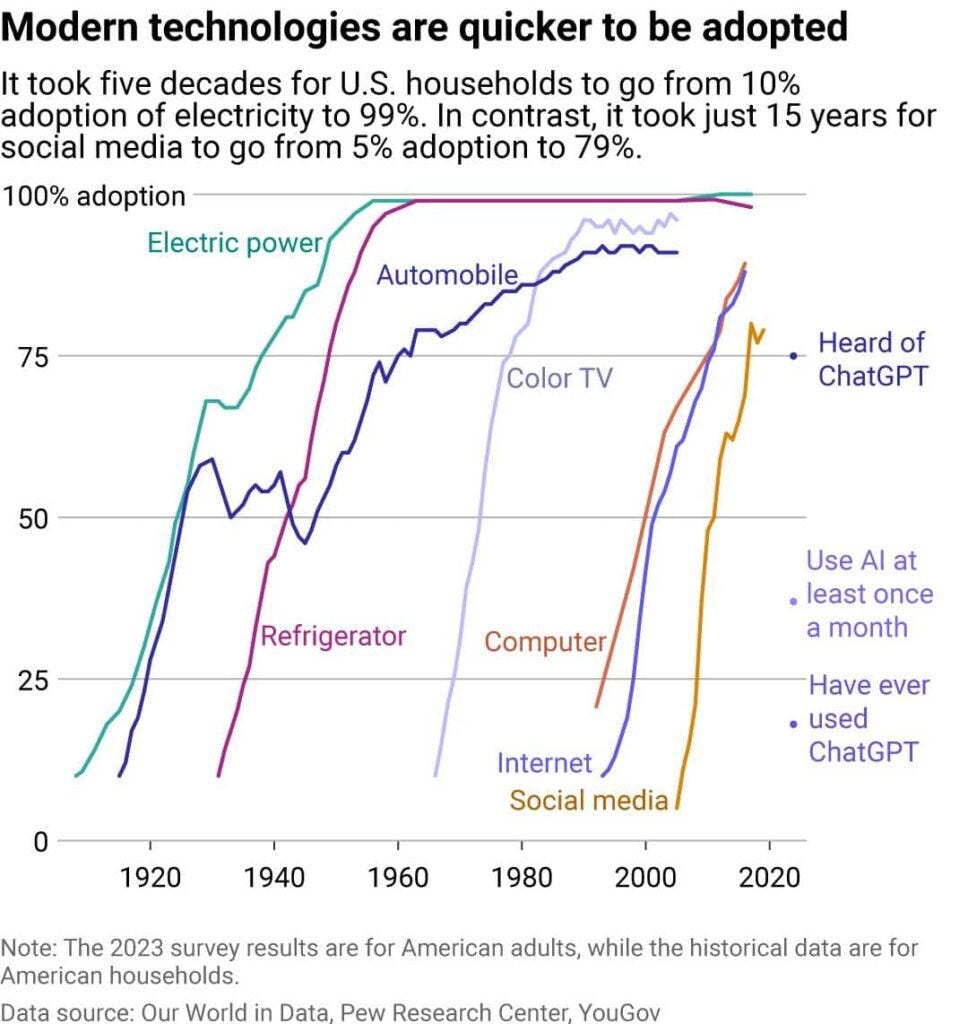
High magnitude change appears like an ocean wave on the horizon. Barely noticeable but harboring massive energy. Only when it crashes ashore do we respect its power to alter our universe. Think of your life before your first smart phone then after. Did you appreciate the change before it happened? I was clueless and my Blackberry offered little insight at the time.
AI, like the smartphone, like the internet, and like airplanes before that, is a formidable force of change. Labor markets will be impacted in unpredictable ways. Many assume it will be catastrophic. It is human nature to be cautious and perceive risks before opportunity, something to factor into the equation.
The Dystopian Scenario
Perhaps the neo-Luddites are right this time. Doubts deserve no benefit when the stakes are this high. For readers looking for a deep dive on the potential economic consequences of complete human labor displacement, I recommend checking out the recent Substack by Philip Trammell and Dwarkesh Patel titled Capital in the 22nd Century.
The authors conclude, rightfully, that a scenario in which labor markets are completely displaced by advanced AI and robotics (i.e. capital transitions from a labor complement into replacement) will lead to unprecedented wealth concentration. Further, it may calcify class mobility, freezing societal strata in its place.
In this scenario, tomorrow’s aristocracy is determined by the discriminating economic system of today. Those fortunate enough to be on the top of the heap during the historic transition will reap the rewards for themselves and their progeny. Hardly fair, but a better deal than the dinosaurs got.
Even so, only those individuals with a thoughtful and patient approach to capital management with a multi-generational mindset could cement their influence. The remaining population is effectively reduced to the value of its contributions to the aristocracy, a frightening prospect given historical precedent.
Optimism & Hope
We do not quite know to what degree AI can supplant human competence. It has demonstrated remarkable capabilities, even replicating cognition once thought to be uniquely human. Generating novel solutions to complex problems, our inherited competitive advantage, can now be partially outsourced to a synthetic process.
What this means for homo sapiens, economically and existentially, is profound. Let us assume for a moment that the heads of the AI industry are correct in their forecast. Where does this put most of the global population? Slightly below cattle, in terms of value offered if economic contributions are the only consideration.
Robbed of productive hegemony, the role the working class is diminished like an outdated relic of the past. We would join Neanderthal as the next entry in the annals of the Homo genus.
This does not mean life becomes purposeless. Rather, knowing human resilience, it is more likely to catalyze a renaissance of discovery and conscious exploration. We might finally have time to address the question, ‘why are we here’.
Maslow’s hierarchy of needs doesn’t stand upside-down, however. The optimistic tone embedded in Elon’s above statement is only justified in an egalitarian framework. Something humans have yet to achieve. Basic needs are satisfied through trade. In other words, “will work for food”.
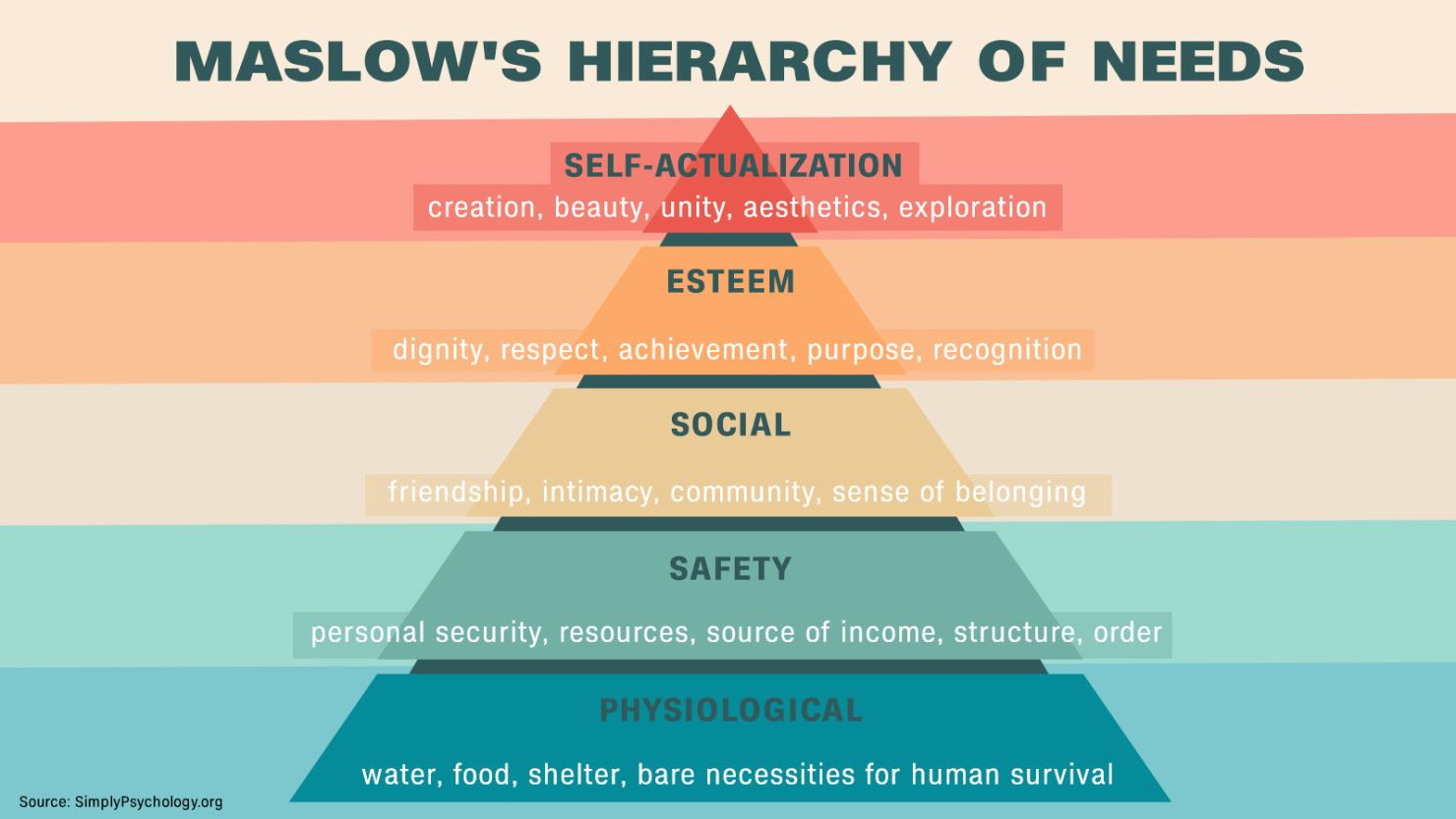
What happens when work can no longer be bartered and capital is the only currency? This issue must be addressed before we can assume optimism as our default. It is not beyond the pale that such a thing is possible if access to talent and labor were as abundant as water.
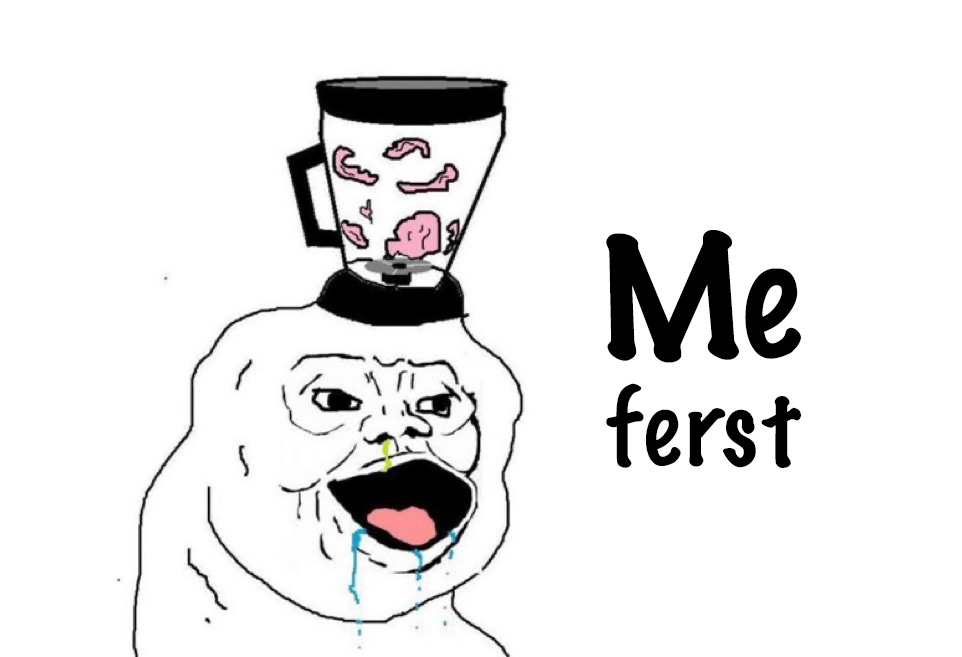
The hurdle to overcome is an engrained scarcity mindset that forces us to hold onto outdated concepts of resource management. This usually devolves into power games and hierarchies. ‘Old habits die hard’ is not just an idiom, it is an axiom.
Big change is on the horizon. It was also on the horizon in 2015 and yet here we are, alive and… surviving. I imagine ten years from now the world will look substantially different. AI integrated with advanced robotics will be commonplace, changing the economic formula for everyone.
Downstream effects will include a need to overhaul the financial system to correct crippling imbalances. This mid-term season, we will be electing Senators responsible for addressing Social Security funding, a challenging reform that is desperately needed before 2032. Payroll taxes are the lifeblood of the program.
As an investor, the sensible response to this disruption is to stay invested. There are no escape hatches or bunkers that can insulate you from the future. Cynicism is a toxic mindset that will poison your outcomes.
Save and invest what you can and strengthen your relationships. This is a timeless prescription for the ails inflicted by uncertainty. And if things pan out for the better, as I believe they will, such an approach will only strengthen your position in life.
The views, opinions, predictions, and commentary expressed in this newsletter are those of the author solely and are provided for general informational and entertainment purposes only. They do not constitute investment, financial, tax, legal, or other professional advice, nor are they a recommendation, offer, or solicitation to buy, sell, or hold any securities, assets, or investments.
Past performance or prior prediction accuracy is not indicative of future results. All investments involve risk, including the potential loss of principal, and market conditions can change rapidly.
Readers should conduct their own independent research and consult with qualified professional advisors before making any investment or financial decisions. The author and KaratStick or National Wealth Management Group, LLC assume no responsibility or liability for any actions taken based on the content of this newsletter or for any errors, omissions, or inaccuracies herein.
Advisory services offered by National Wealth Management Group, LLC.